Imperial Creatures: Humans and Other Animals in Colonial Singapore, 1819-1942
- Description
- Praise
- About the Author
-
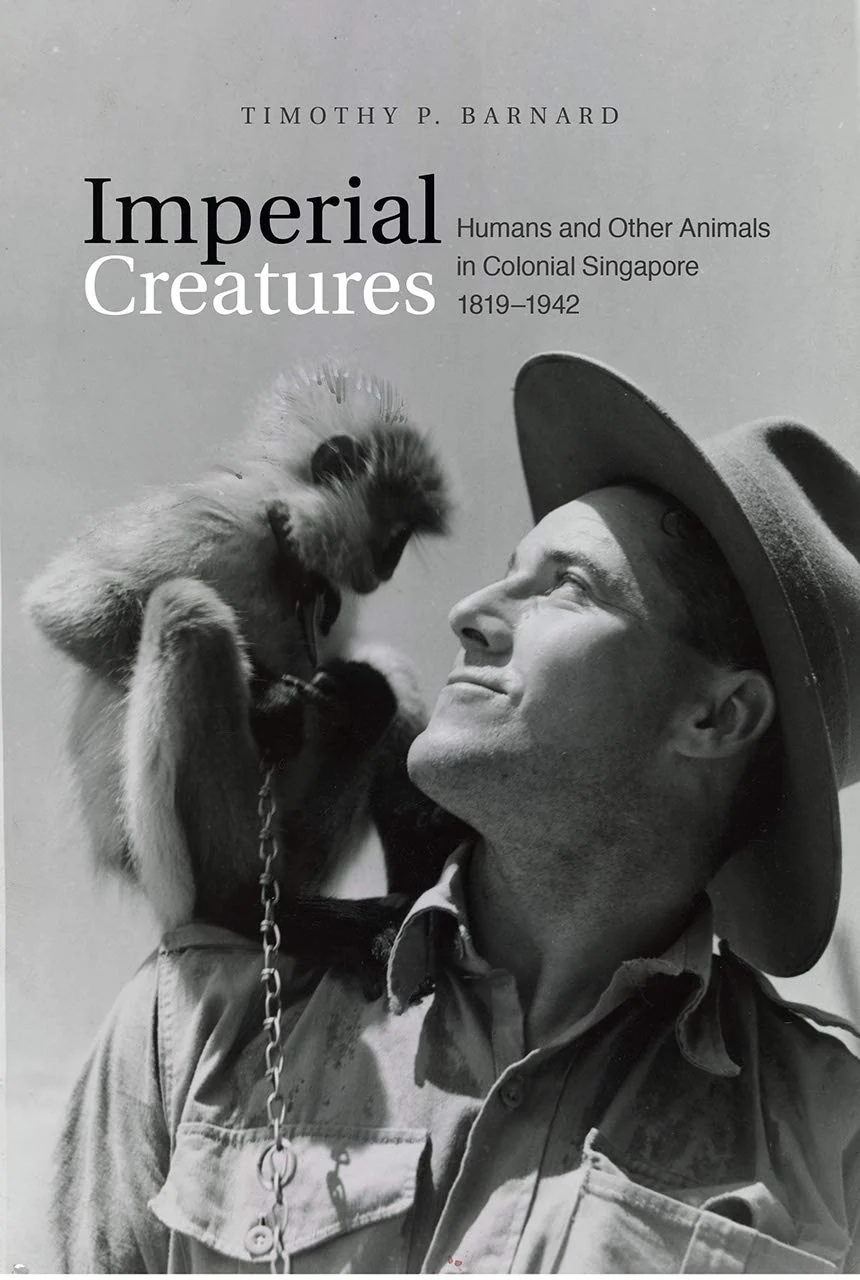
The environmental turn in the humanities and social sciences has meant a new focus on the history of animals. This is one of the first books to look across species at animals in a colonial, urban society. If imperialism is a series of power relationships, it involves not only the subjugation of human communities but also animals. What was the relationship between these two processes in colonial Singapore? How did various interactions with animals enable changes in interactions between people and the expression of power in human terms.
The imposition of imperial power relationships was a process that was often complex and messy, and it led to the creation of new communities throughout the world, including the colonial port city of Singapore. Through a multi-disciplinary consideration of fauna, this book weaves together a series of tales to document how animals were cherished, slaughtered, monitored, and employed in a colonial society, to provide insight into how imperial rule was imposed on an island in Southeast Asia. Fauna and their histories of interacting with humans, thus, become useful tools for understanding our past, revealing the effects of establishing a colony on the biodiversity of a region, and the institutions that quickly transformed it. All animals, including humans, have been creatures of imperialism in Singapore. Their stories teach us lessons about the structures that upheld such a society and how it developed over time. -
"This original work of Singaporean and colonial/imperial history incorporates a variety of multidisciplinary approaches ranging from zoology to cultural studies. Like the legendary swordfish that attacked ancient Singapore, animals and their relationship to humans provide useful metaphors through which we can understand the past of this small island."
- John Miksic, Professor, Southeast Asian Studies Department, NUS -
Timothy P. Barnard is an associate professor in the Department of History at the National University of Singapore, where he specializes in the environmental and cultural history of island Southeast Asia.
Product Information
Product Information
Shipping & Returns
Shipping & Returns
Description
- Description
- Praise
- About the Author
-
The environmental turn in the humanities and social sciences has meant a new focus on the history of animals. This is one of the first books to look across species at animals in a colonial, urban society. If imperialism is a series of power relationships, it involves not only the subjugation of human communities but also animals. What was the relationship between these two processes in colonial Singapore? How did various interactions with animals enable changes in interactions between people and the expression of power in human terms.
The imposition of imperial power relationships was a process that was often complex and messy, and it led to the creation of new communities throughout the world, including the colonial port city of Singapore. Through a multi-disciplinary consideration of fauna, this book weaves together a series of tales to document how animals were cherished, slaughtered, monitored, and employed in a colonial society, to provide insight into how imperial rule was imposed on an island in Southeast Asia. Fauna and their histories of interacting with humans, thus, become useful tools for understanding our past, revealing the effects of establishing a colony on the biodiversity of a region, and the institutions that quickly transformed it. All animals, including humans, have been creatures of imperialism in Singapore. Their stories teach us lessons about the structures that upheld such a society and how it developed over time. -
"This original work of Singaporean and colonial/imperial history incorporates a variety of multidisciplinary approaches ranging from zoology to cultural studies. Like the legendary swordfish that attacked ancient Singapore, animals and their relationship to humans provide useful metaphors through which we can understand the past of this small island."
- John Miksic, Professor, Southeast Asian Studies Department, NUS -
Timothy P. Barnard is an associate professor in the Department of History at the National University of Singapore, where he specializes in the environmental and cultural history of island Southeast Asia.